Understanding the Three Types of FSSAI Licenses: Basic, State & Central
1/9/20262 min read
What is an FSSAI License?
An FSSAI license or registration is a legal approval issued by the government that allows food businesses to operate in India. It is essential for ensuring that food products meet the appropriate safety and quality standards established by the Food Safety and Standards Authority of India (FSSAI). Compliance with these standards helps protect consumer health and provides assurance to customers regarding food safety.
Types of FSSAI Licenses
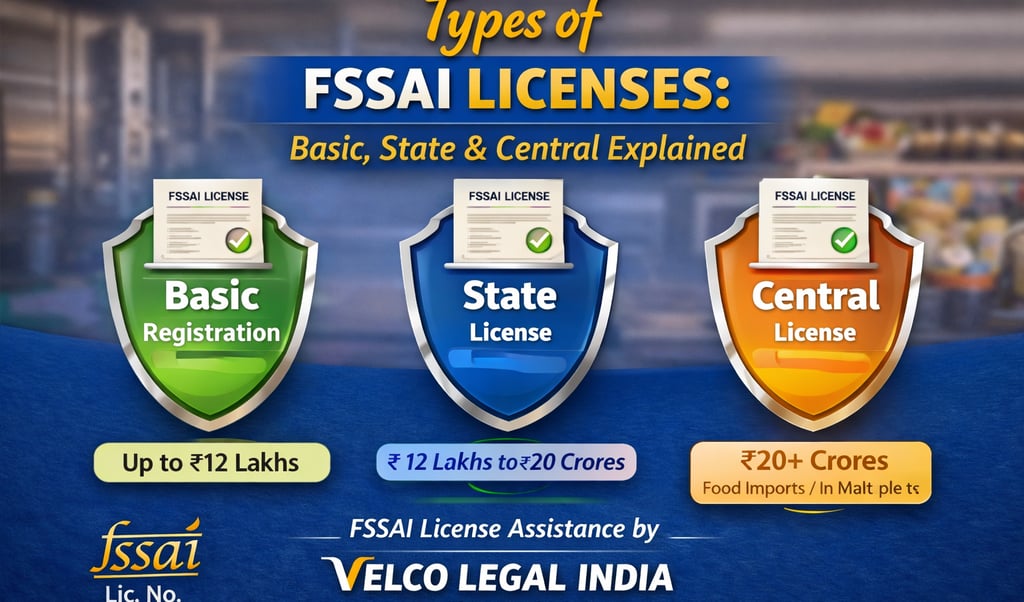
In India, there are three main types of FSSAI licenses – Basic, State, and Central. Each type serves a specific purpose and is tailored to the scale and nature of food operations.
1. Basic FSSAI License
The Basic FSSAI license is suited for small-sized food businesses. This type of license is generally required for small vendors or food businesses with an annual turnover of up to ₹12 lakhs. Those who prepare food at home, such as small caterers or food delivery services, would typically apply for a Basic FSSAI license. The process involves filling out an application, providing necessary documents, and paying a nominal fee. This license is a crucial step for small entrepreneurs embarking on their journey in the food sector.
2. State FSSAI License
The State FSSAI license is designed for medium-sized food businesses whose turnover is between ₹12 lakhs and ₹20 crores. This includes restaurants, food processing units, and wholesalers. To apply for a State FSSAI license, the applicant must provide a comprehensive list of documents showcasing their operations and infrastructure. The state-level authorities will review the application and conduct an inspection if required. This license helps assure customers that the establishment adheres to regulatory standards, making it a key aspect for businesses aiming for growth.
3. Central FSSAI License
The Central FSSAI license is required for large food business operations, typically involving an annual turnover exceeding ₹20 crores. This license is essential for manufacturers, importers, and exporters operating on a national or international scale. The application process is more detailed and requires comprehensive documentation. The license not only represents compliance with safety regulations but also helps in enhancing the credibility and reputation of large food businesses.
Choosing the Right FSSAI License for Your Business
Determining which FSSAI license is appropriate for your food business depends on various factors, including your business size, operational scale, and the type of products or services you offer. Understanding the distinctions between these licenses is crucial to ensure compliance and operational viability. Securing the correct FSSAI license not only fosters business development but also promotes consumer confidence in your food products.
Velco Legal India
+91 7300003182 / +91 7300003184
Disclaimer: This website is a property of a consultancy firm, providing consultancy services w.r.t. Food License.
We expressively declare that we are private consultants. © 2022 velcolegalindia.com - All Rights Reserved.